
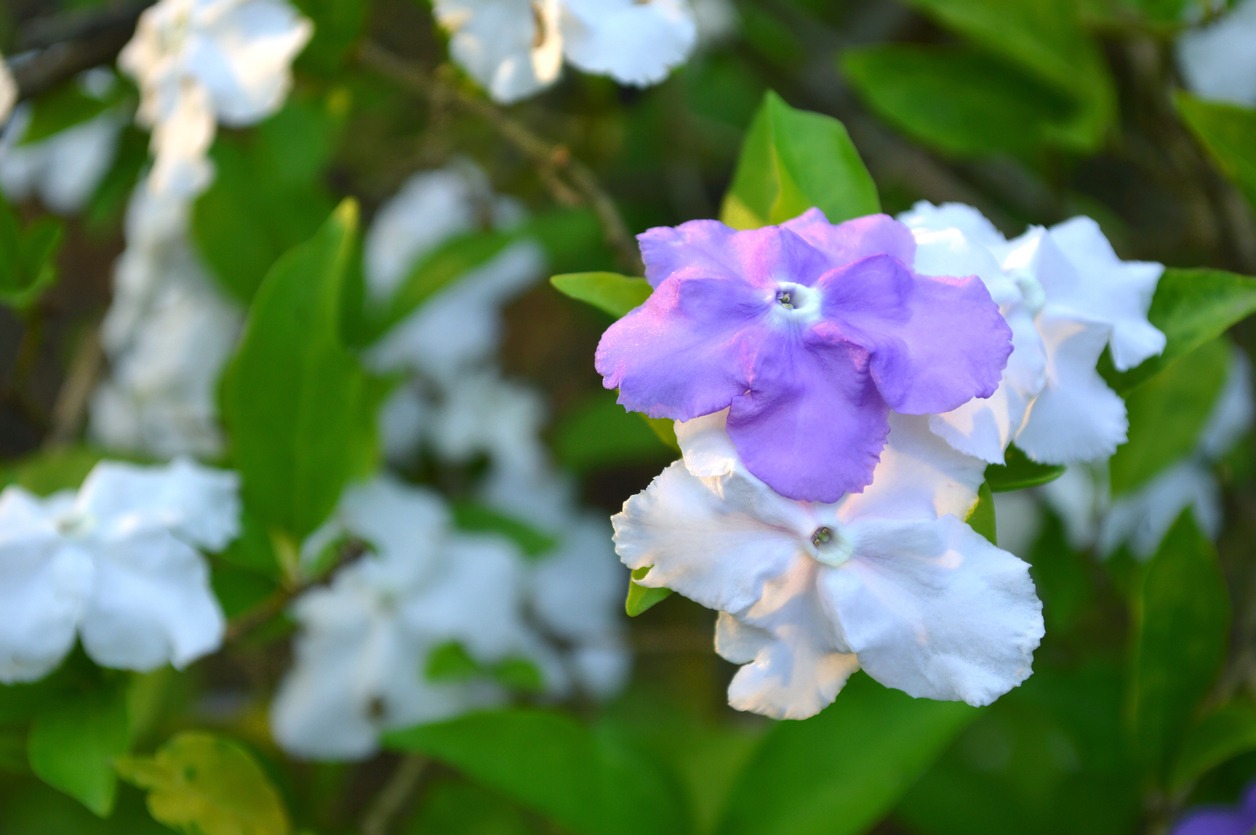
Spring is in full bloom in New Orleans. Life is everywhere—oak trees release pollen, and delicate flowers bloom all around us. Nature shows us the power of creation. In the natural world, life depends on other life to continue. In humans, this drive appears as attraction, chemistry, and reproduction. Rather than ignoring it, yoga invites us to understand and guide it. This is the idea behind Brahmacharya—using our creative and sexual energy wisely. It can be understood as living in a way that leads us toward something greater, channeling our energy toward a meaningful and balanced life.
Traditionally, Brahmacharya referred to a stage of focused study in youth or, for some, a life of celibacy. But for most people, it means handling attraction and relationships with care and respect—being committed, honoring boundaries, and treating others with integrity. When done well, relationships can bring lasting joy and peace, not just to those involved but to others around them.
At the same time, we can see how easily this energy is misused. Many people are hurt through dishonesty, manipulation, or neglect in relationships. The online world can make this worse by promoting distorted, unrealistic ideas about human connection, often leading to confusion and loneliness—especially for young people.
So how do we practice this today? It comes down to how we use our energy. Brahmacharya encourages us to direct our energy toward what truly nourishes us, instead of ensnaring ourselves and others in harmful patterns. If you are in a relationship, this means showing kindness, respect, and care—even when things are difficult. That is a deep practice.
Beyond human partnership, how we respect energy in its many forms is worthy of attention. Regarding the foods we consume, many aspects of large-scale food production are harmful for the animals involved, whose reproductive capacities are used in unnatural ways to maximize output. Simple attention to food sourcing and diet choices are a tangible, life-affirming way to practice Brahmacharya, as we recognize our interdependence in the web of life on this planet. It is not about achieving some kind of “perfect” behavioral pattern, but about increasing our awareness so we can help create a world we want to live in, one small, sustainable action at a time. In this way, Brahmacharya links back to ahimsa (non-harming), the first Yama, which is the bedrock of the whole path of Yoga.
Looking more broadly at how we manage our personal energy, a study of habits and patterns that deplete us is another way to look at Brahmacharya, which literally means path to the divine (see etymology below). When I spend too much time reading about conflict and destruction in the news, truly, I have already depleted my “battery” before I sit down to pray and meditate in the morning. I missed my “path to the divine” in exchange for catching up on the news? Shoot! It is so easy to get caught up in this fast-paced world, but the path is always there for us in its quiet way.
So many great teachers remind us that human life is a gift, and advise us to use our energy and time wisely. One of my favorite teachers talks about attention being a currency, a word usually reserved for money or electricity. How are we spending our precious currency of attention? Are we using it in ways that drain us, or in ways that sustain us?
This month, we celebrate creative energy within and around us, and seek, as yogis, to be skillful stewards of that energy and to respect it in others. Time on the mat gives us space to release stress and restore ourselves—keeping our energy steady, clear, and fully charged. Let’s practice this respectful pathway of boundaries, honor, and skillful direction of prana, the sacred energy within us all.
Teaching tips
Asana:
Hip openers, forward folds, and practices focused on the Svadhisthana chakra help us connect with and respect our creative energy. We’ll close with gentle inversions to help distribute this energy throughout the body. Inversions can also shift our perspective, connecting us to our highest nature, with the crown acting as a channel. As we keep our energy strong and well-balanced, we can stay connected with our highest potential.
Etymology of Brahmacharya:
Brahmacharya is “the path that leads to Brahman” or “moving in Brahman”.
Brahman is ultimate reality, the Divine, and comes from Sanskrit roots meaning “to expand” and the “Supreme”.
Carya is “activity, mode of behavior, or virtuous way of life”.
Sanskrit translations come from: A Concise Dictionary of Indian Philosophy, by John Grimes.
Mantra:
Saha Navavatu
Om Saha Navavatu
Saha Nau Bhunaktu
Saha Viryam Karavavahai
Tejasvi Navadhi Tamastu
Ma Vidvisha vahai
OM Let both of us protect each other
May both of us enjoy our studies together
May we perform with great energy and deep concentration
May we shine with understanding of what we study
May we be free from hostility from lack of understanding
Life, Peace, Om.
Quotes:
“Without much prana, we can never give anything to anybody, just as only a fully-charged battery can give power, never a weak one. In observing brahmacharya, we build up this energy. A yogi should always keep this in mind. Teaching yoga is not like teaching history or geometry. The teacher must impart a life force – a little current – into others. How can he (or she) do this if he (or she) is weak, if he (or she has a rundown, discharged battery? So keep your batteries full of energy.” –Swami Satchidananda
“Nature does not hurry, yet everything is accomplished” – Lao Tzu