
By Joy Meade
Yoga develops our awareness of the interplay of our physical and energetic being. Our physical practice of asana, the postures, can give us insights into habits and ways of thinking that may cause us and those around us to suffer. It can be so easy to be captivated by the physical, though, and lose sight of what the physical represents.
In Yoga Sutras 2.30, Master Patanjali outlines five external disciplines, or Yamas. The Yamas constitute “the great vow of yoga”. These disciplines are not asana in the traditional sense, but they are physical. We could even think of them as our asana, or posture, in the world, shaping how we move through it and how we relate to everything around us. The third Yama is asteya, or non-stealing, so it’s time for confessions of a yoga teacher…
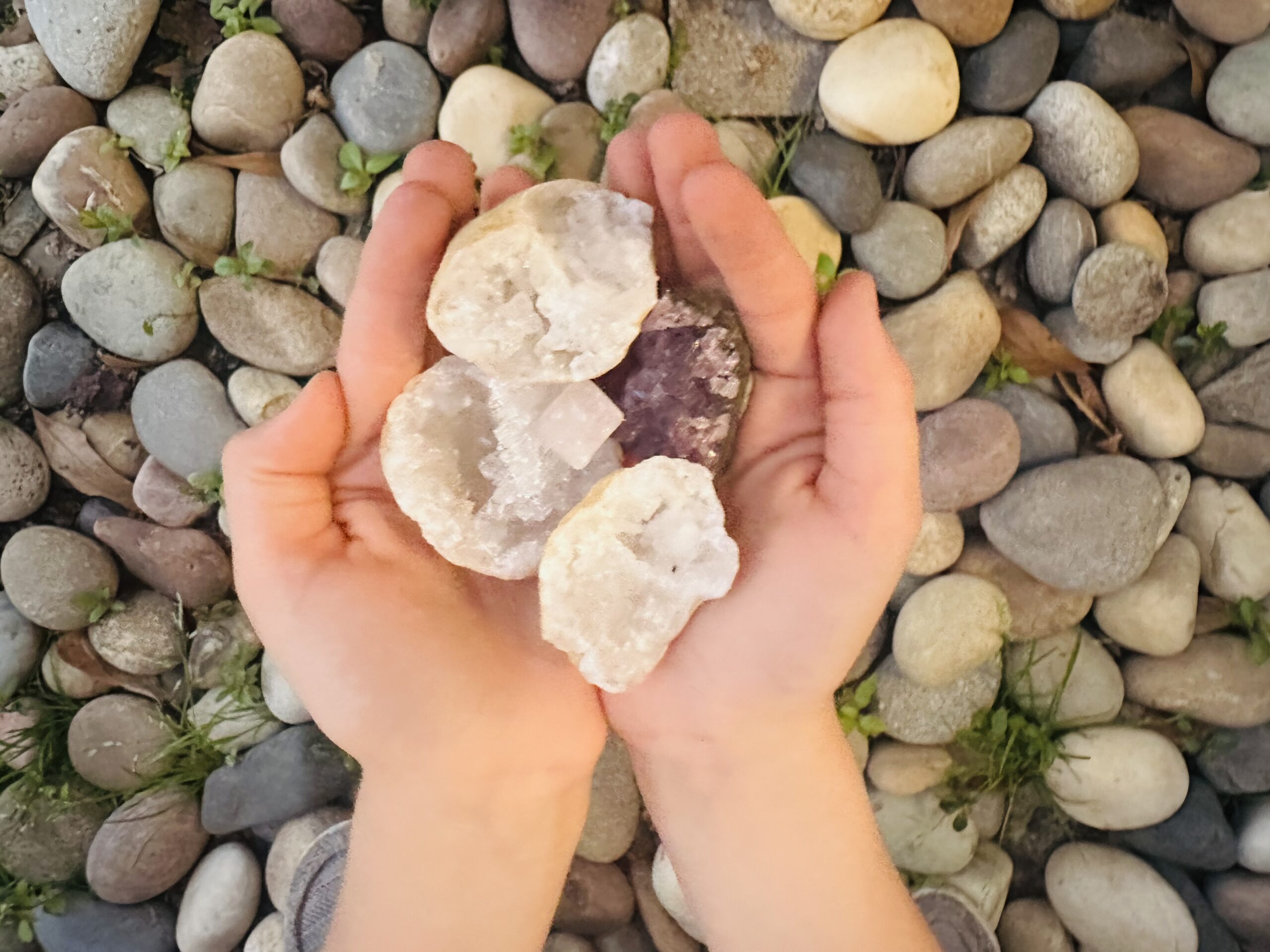
When I was in the fourth grade, my class took a field trip to the National Air and Space Museum. The field trip culminated, as most do, with a stop in the gift shop. I was enamored by a beautiful rose quartz and a pencil with a tube at the eraser end, filled with tiny rocks and crystals. There was only one problem: my parents hadn’t given me any money to spend in the gift shop. So I slipped the items into my pocket and continued on my way, carrying these trinkets that felt so incredibly important.
There were a couple of other occasions throughout my adolescence when I availed myself of the “five-finger discount”, but by the time I became an adult I learned to control the urge. The suffering that can arise from stealing is fairly easy to recognize, but even if we have mastered this asana in the world, I think there is still benefit from revisiting and exploring the posture.
The Yoga Sutras describe the physical world as a reflection of our true nature and of the fleeting, glittering things that seem to offer happiness but often create inner turmoil. If I revisit that moment of my younger self, I can still keenly feel the gaping hole I thought I would suffer if I left that day without those things in my hand. I thought those shiny, beautiful rocks would satisfy me, and I began a cycle of looking to external things as the source of happiness.
I can see now that I attached my worth and my identity to obtaining, achieving, and having, and this is a place I still find myself frequently. When I get hired for this job, make that salary, move into that neighborhood, have that relationship, then I will be satisfied, happy, and noteworthy. I can’t physically put my hands on any of those things, but the work I do on the physical plane brings awareness to this deeper cycle of attachment. When I depend on something outside myself to provide happiness, a sense of well-being, or fulfillment, I give that thing the power to define who I am, and I lose sight of who I truly am. As I stay my hand in the physical realm, I may discover I don’t need that thing to lead a fulfilling existence, or to see beauty, or to be worthy of belonging, and these are empowering discoveries! Awareness can then spiral deeper to a more subtle inquiry, “What am I stealing from myself and those around me with my habits and choices?”
In Mudra and Bandha practices, we feel into the connection of the hands to the heart chakra. If you hold your arms out wide, shoulder height, and clench your fists tight, you will feel the muscles of your arms, chest and rib cage grow tight and squeeze your heart center. Now open your fingers wide, and stretch through the tips of your fingers, like you’re reaching for opposite walls. Feel the channels running from your fingers to your heart open as the chest cavity expands, and your heart center grows spacious. Breathe into that spaciousness, and allow yourself to absorb how alive and energetic that spaciousness feels.
Patanjali teaches in Yoga Sutra 2.37, “For those who have no inclination to steal, the truly precious is at hand.” The practice of yoga is a way of returning to and remembering who we truly are. As you practice holding what calls to you more loosely, with open, unclenched hands, may the most beautiful and valuable jewel of all rise to the center of your awareness: the jewel at the center of your heart. Om mani padme hum.